

Today was a difficult day, when visiting a country its important to understand the history but when that history is mass genocide of millions of people and less than 45 years go, it does make you wonder why and how cruel people can really be. Seeing the photos in Vietnam of the American soldiers murdering and torturing innocent Vietnamese people was one thing, but to see and hear about a country killing their own and for no good reason was just madness.
The one responsible for this tragedy was Pol Pott. He came from a wealthy family, and his grandfather worked in the Royal Palace. His sisters became the royal concubines, and his brothers worked at the Palace, too. He wasn’t the most academic, and after high school, he changed to a blacksmith as he failed exams, He also became a buddist monk. However, in Cambodia, this is not for life, and you can become a monk for as little as a month. He managed to get a scholarship to France through his royal connections, and in 1952, he joined the communist party in France, and it’s here that he started to become a political activist. It is hard to believe Pol Pots was a former Buddhist monk and then a history teacher at private school and before becoming a mass murder.
In 1965, the King, Norodom Sihanoukut, cut all ties with the US and aligned with North Vietnam. This led to Americans bombing in Cambodia and set the path in motion for Pol Pott, leader of Khmer Rouge’s regime, and became prime minister.
Khmer Rouge’s regime targeted educated people. Health care, doctors, teachers, and only agricultural workers survived. They killed whole families due to the parents being educated. Take the weed out by the roots. They were worried that educated people would cause an uprising.
There were 7 million people in the whole country, between 1975 and 1979, 1.7 million were killed, 1 million more died from starvation, and a large number were missing. As of 1980, there were only 4 million people left in the country! Now 44 years on, the population of Cambodia is 17 million, with the youngest average age in the world.
Our guide had times when he got emotional, as this history and his life were very real to him. He told us he lost 5 of his siblings to starvation and being overworked at the time. He himself had to work in the fields as a human scarecrow at the age of 6.
Killing fields
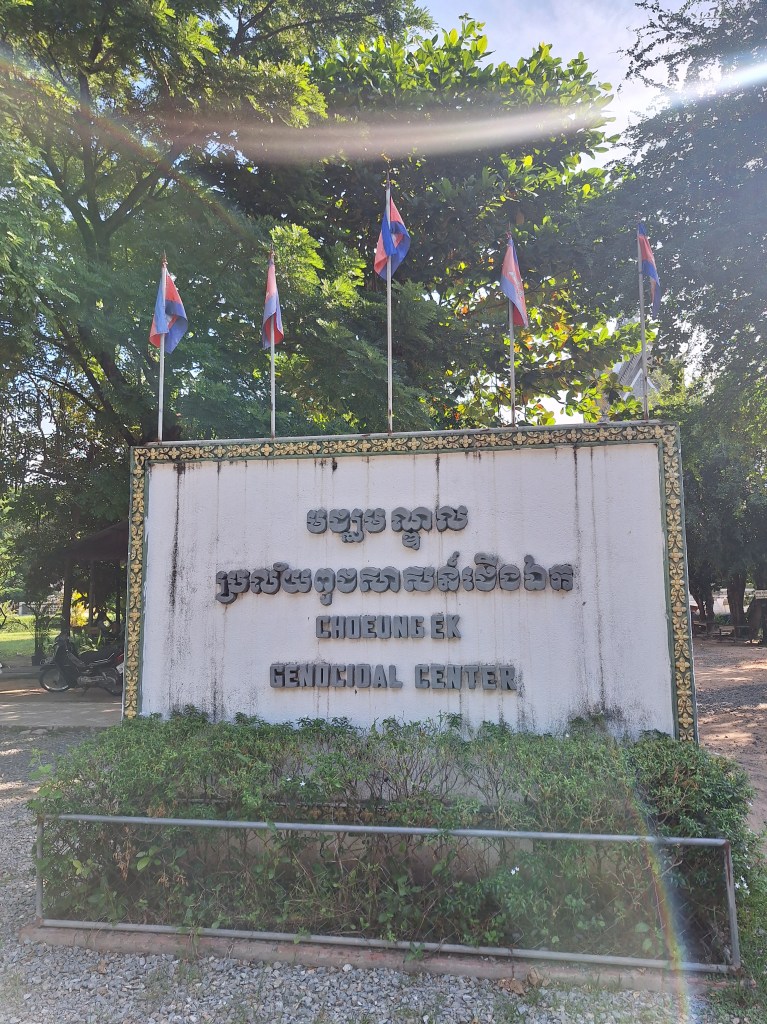
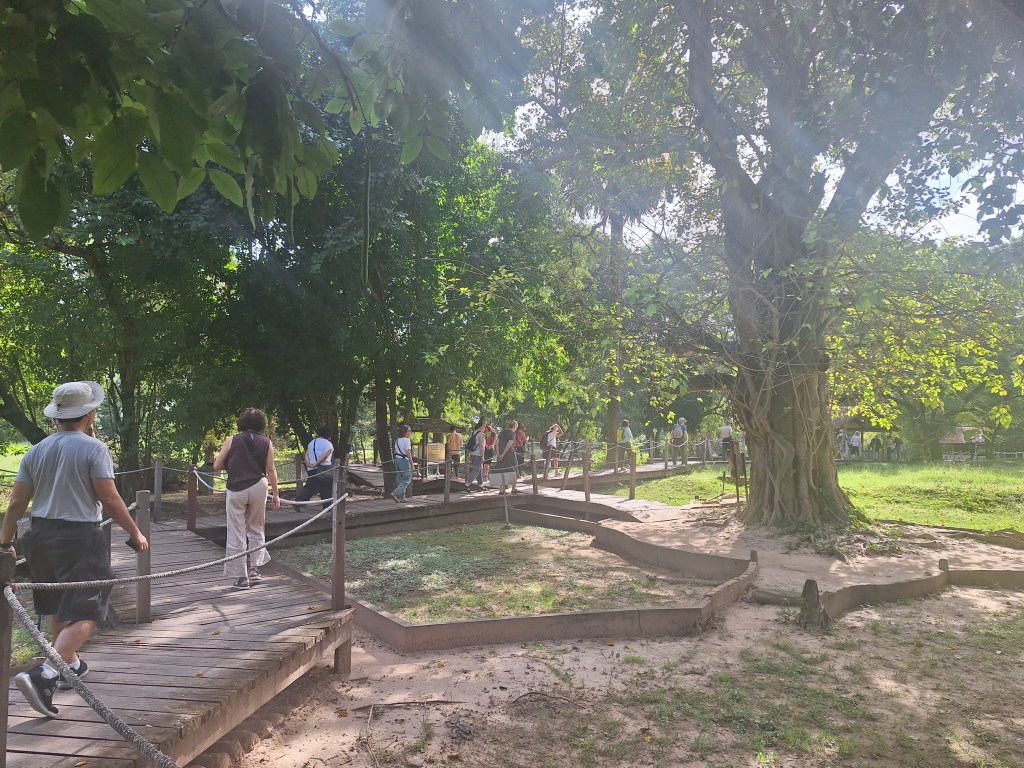
The first stop today was the Choeung Ek killing fields, which was only 1 of 383 across the whole of Cambodia. It was estimated that 20,000 people were killed at this site
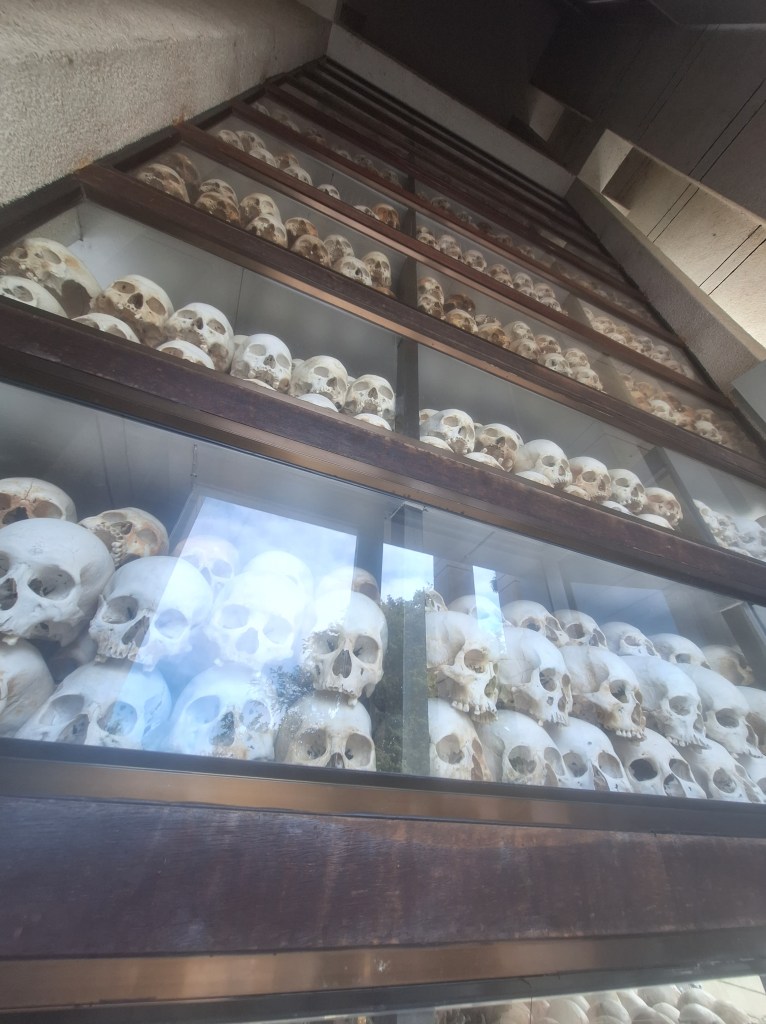
In 1979, they found 129 mass graves in this area. Only 86 mass graves were exhumed. 8985 remains were found in those 86 graves. There was no way of identification, as the lists of names they would have taken at the time were destroyed.


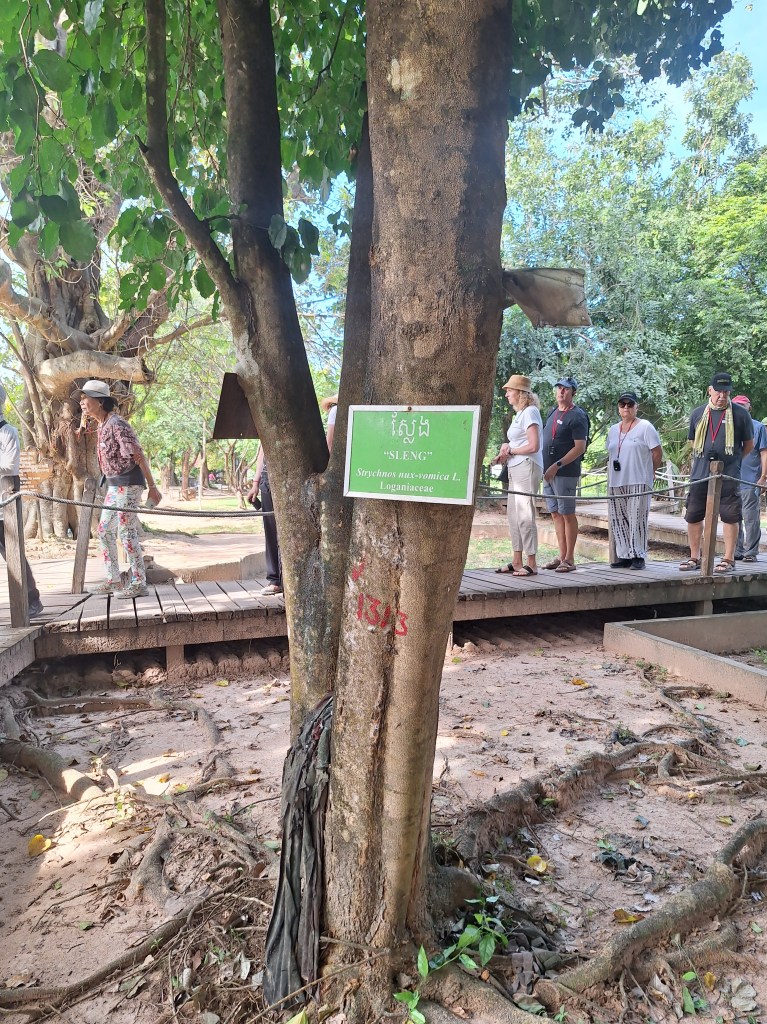
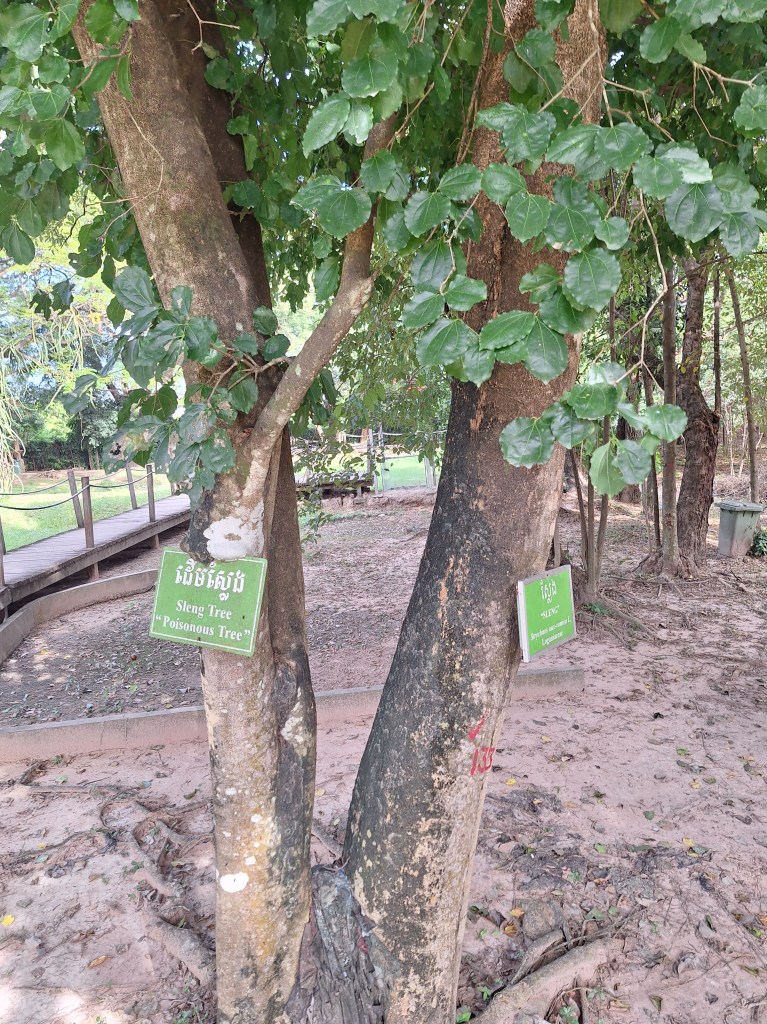
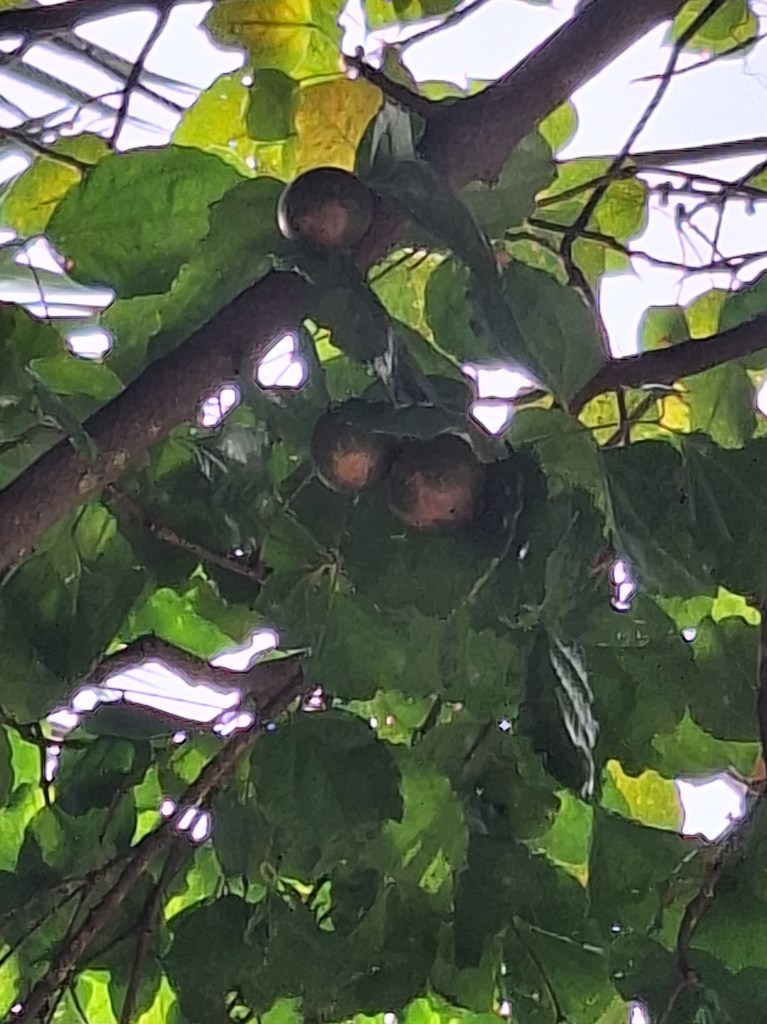
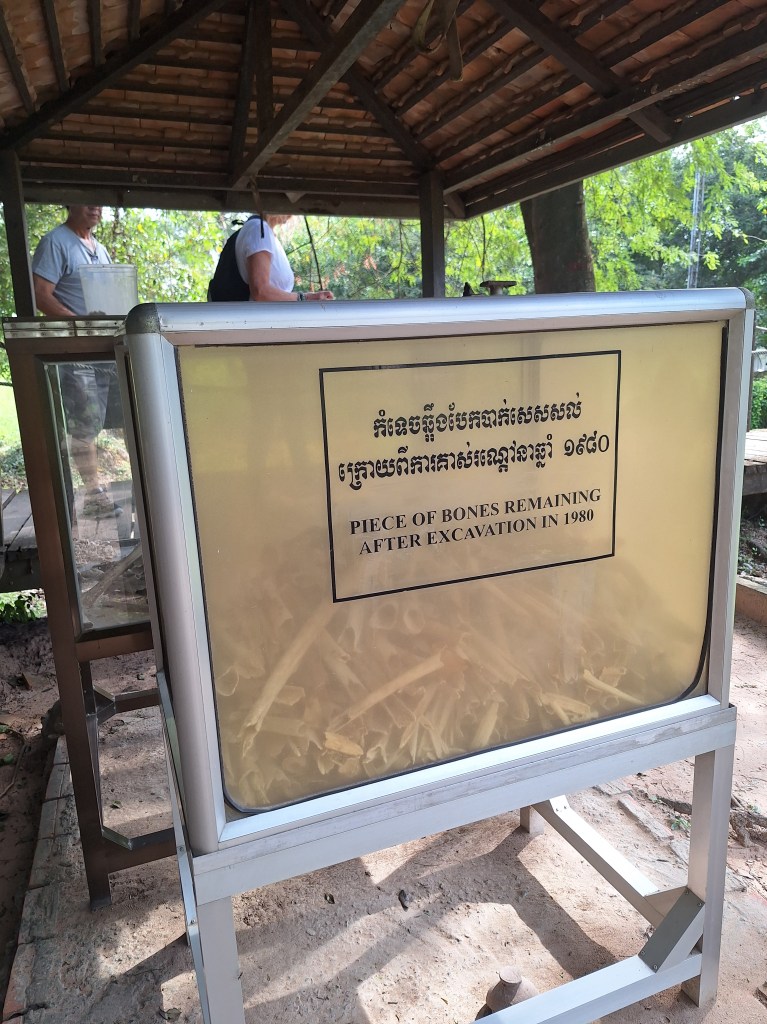
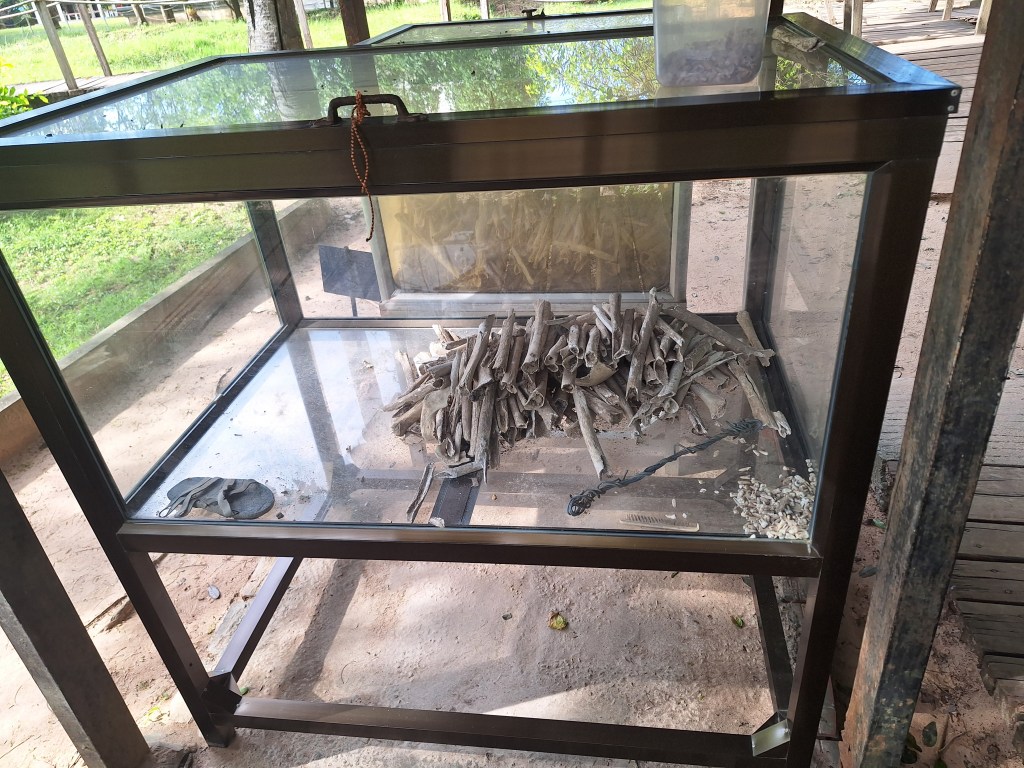
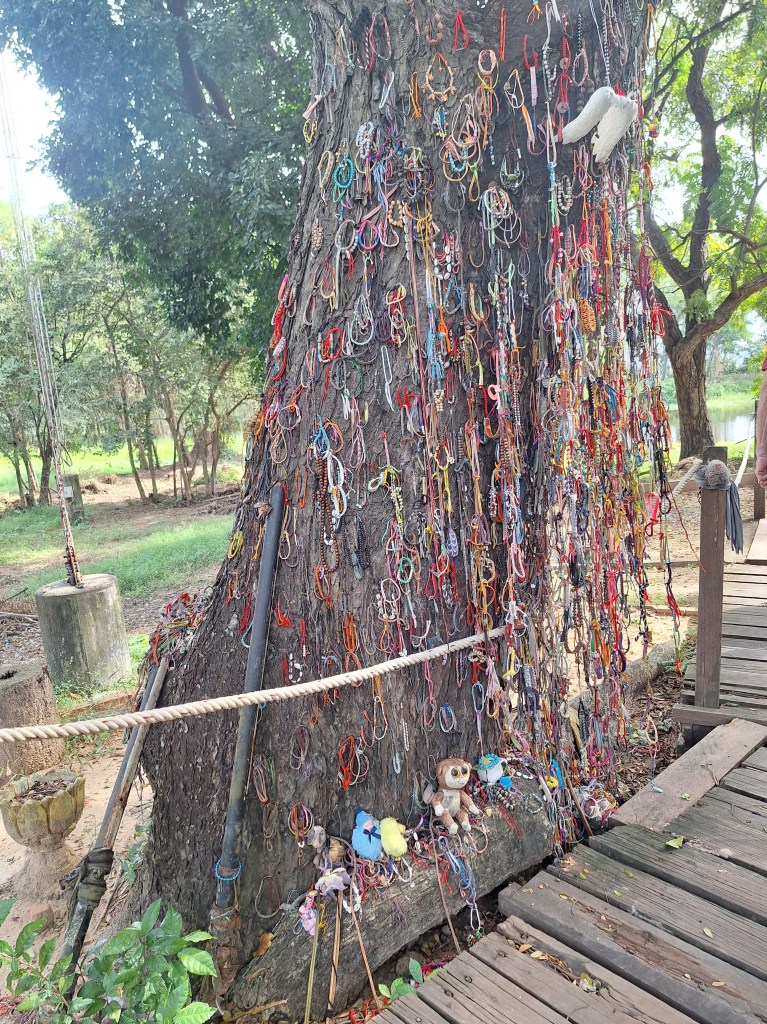
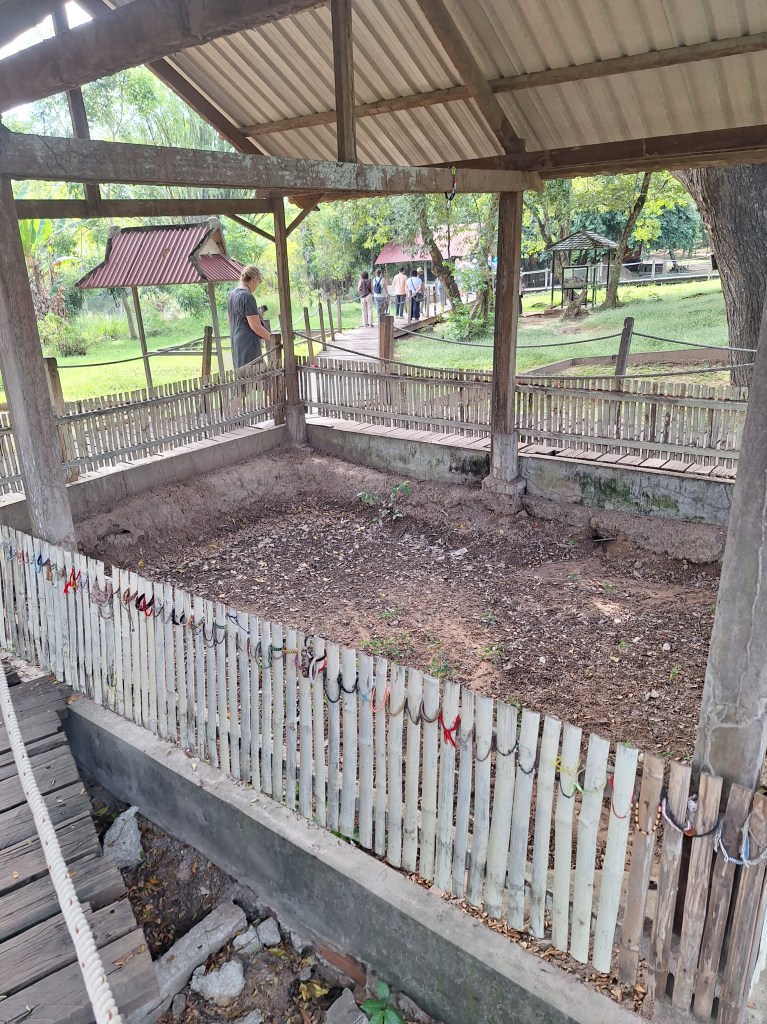
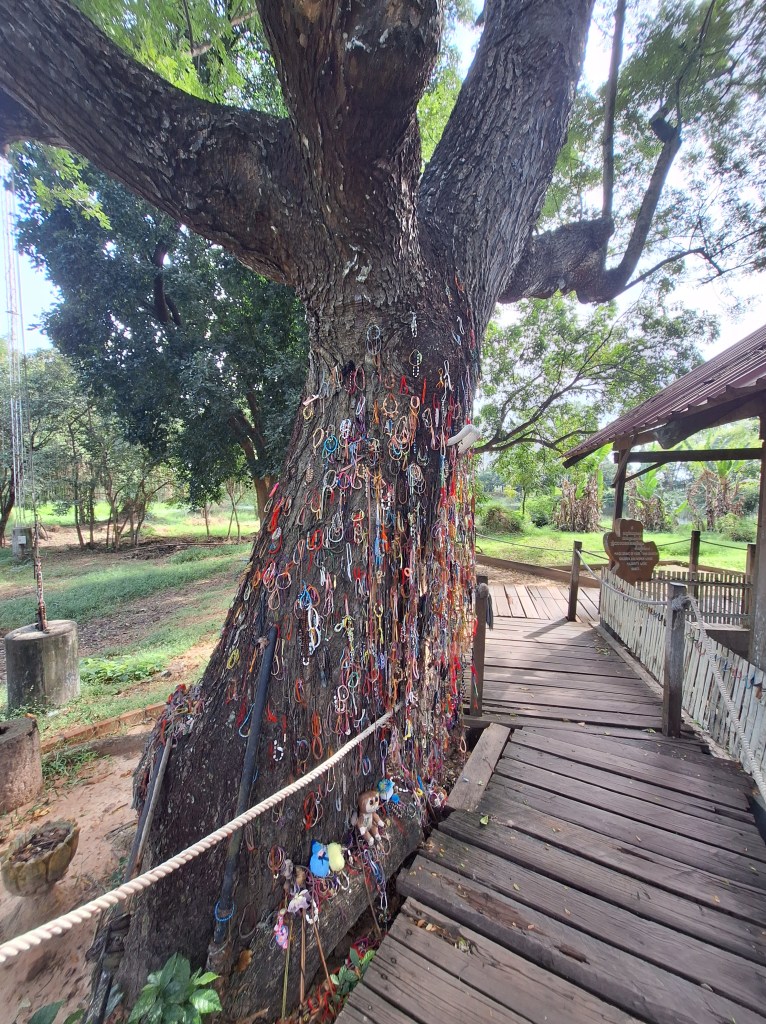
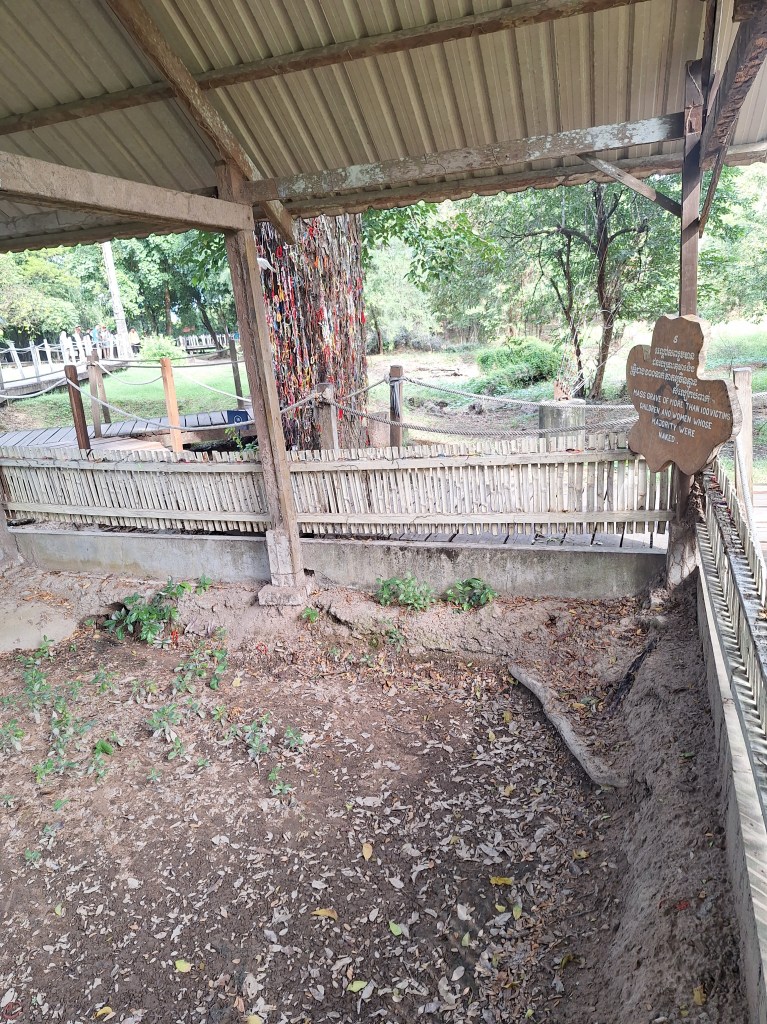
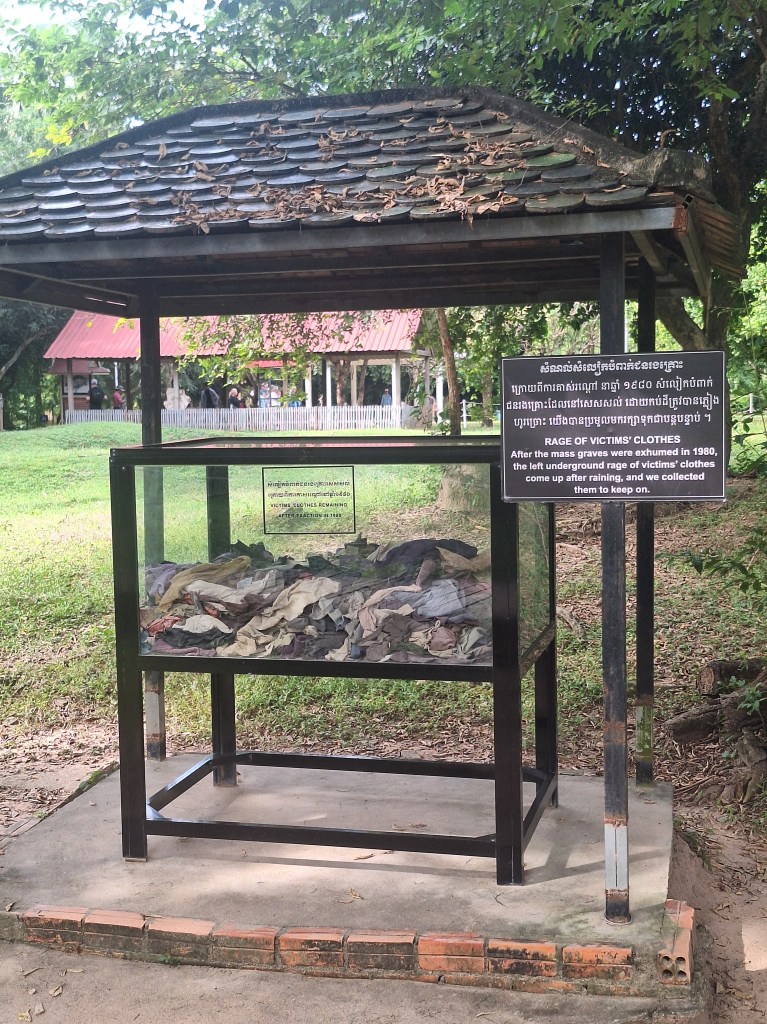
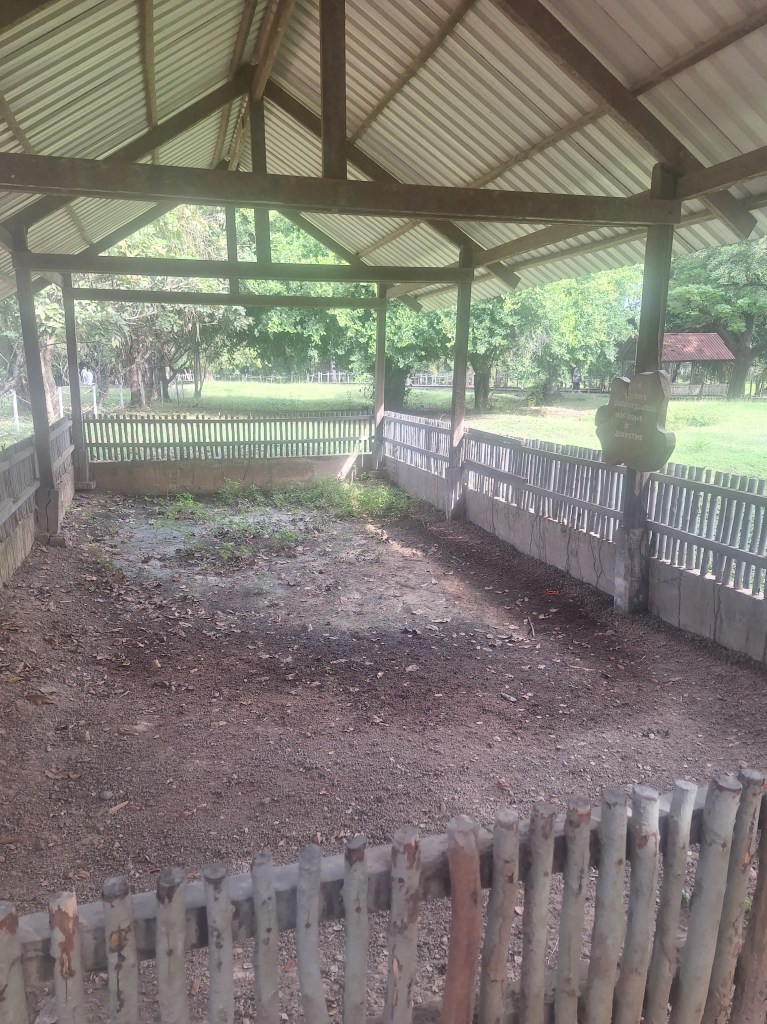

There are photos of the Sleng Potion tree. Looks like lime green, and when ripe, it’s orange. They have 4 seeds inside. 1 seed will kill a person, but when used in small amounts, it can be medicine, and even our guide said he used it when he was younger.
I was surprised to learn that they had children solider in the regime as young as 10 and they were made to kill people. They were told they could only keep themselves alive and not even help their family. To keep them in fear, any soliders that disobeyed had their heads cut off, and there was a special mass grave for them.
They worked to keep these killing fields secret as long as possible with music to cover screams, lime go cover smells, and transported victims from the prison to the fields in the night.
1986, the government built a memorial stupa to remember the dead and keep the bones collected from the exhumed graves.

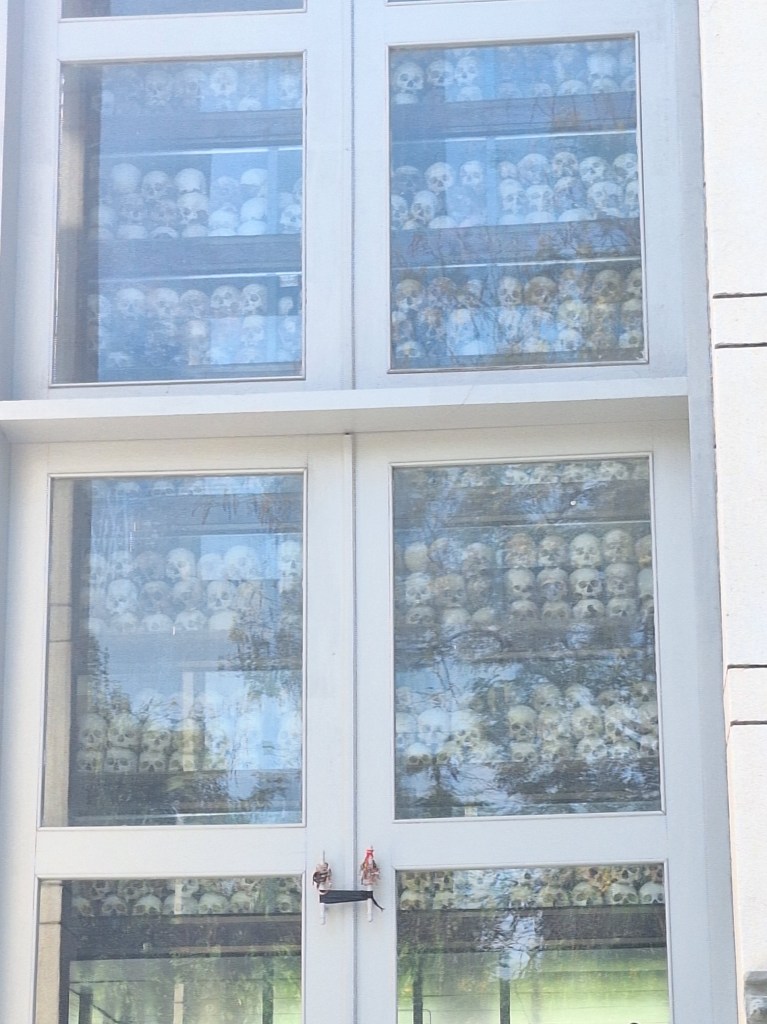

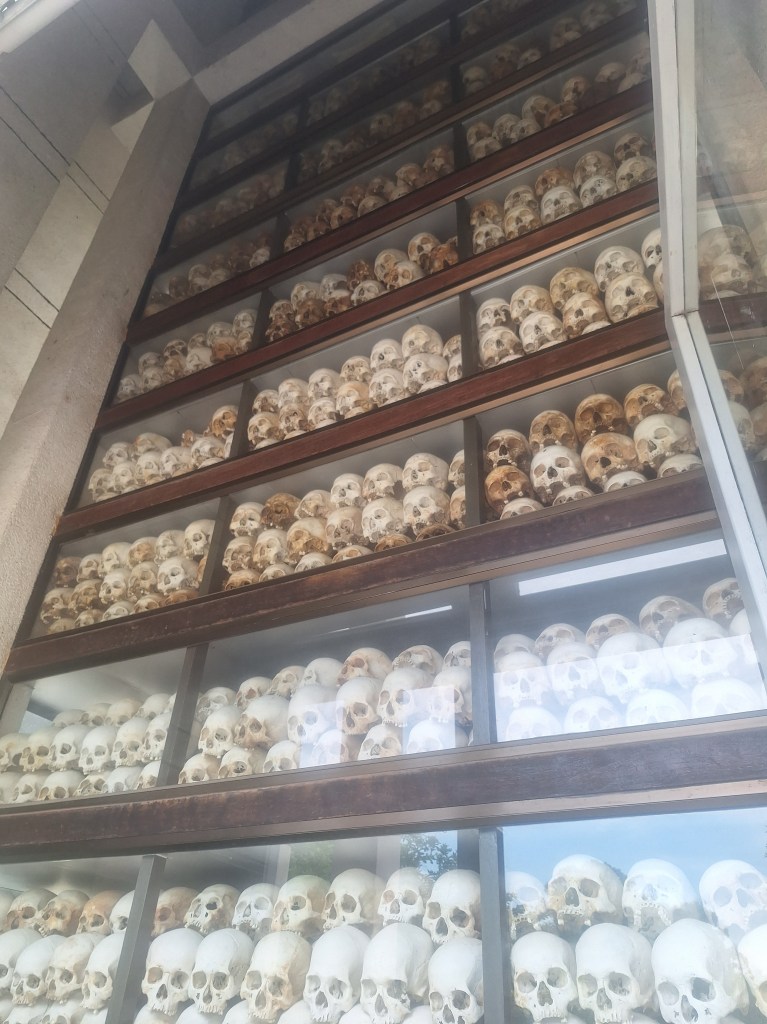
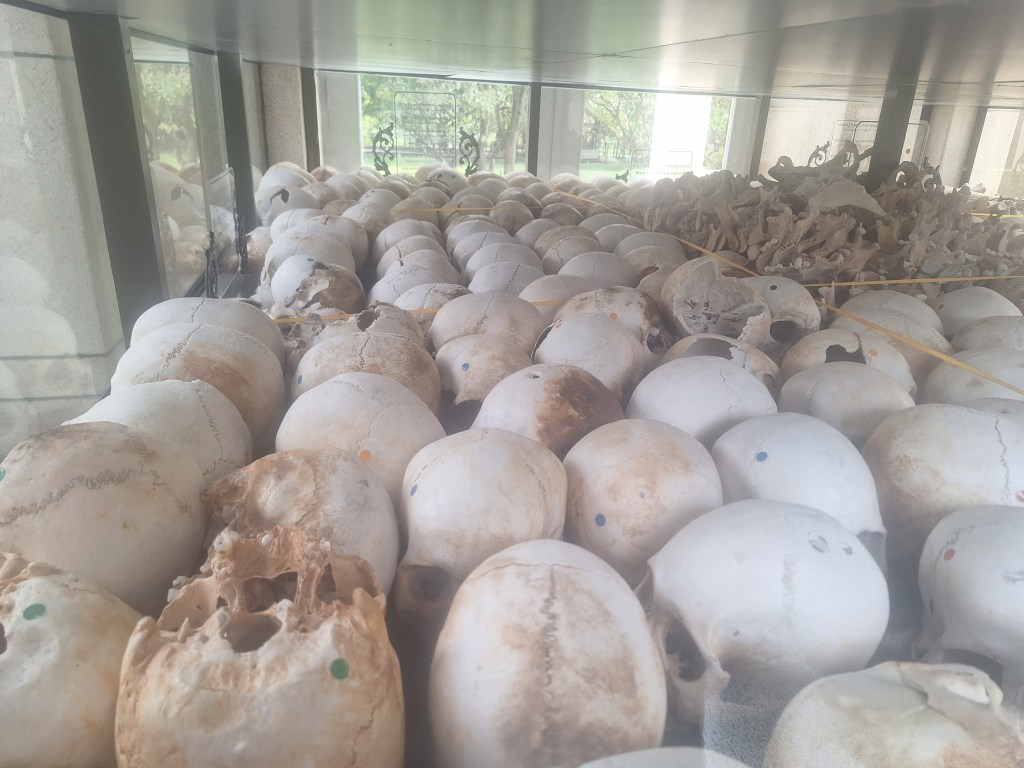
S21 Tuol Sleng Genocide Prison Museum
The next stop was nearby and was a high school that had been turned into a prison. This is where the majority of the victims would have been tortured to provide friends, family, and co-workers to be rounded up before they were sent to the killing fields to meet their end.
This was 1 of 196 prisons all over Cambodia.
The prison was broken into 4 main areas:
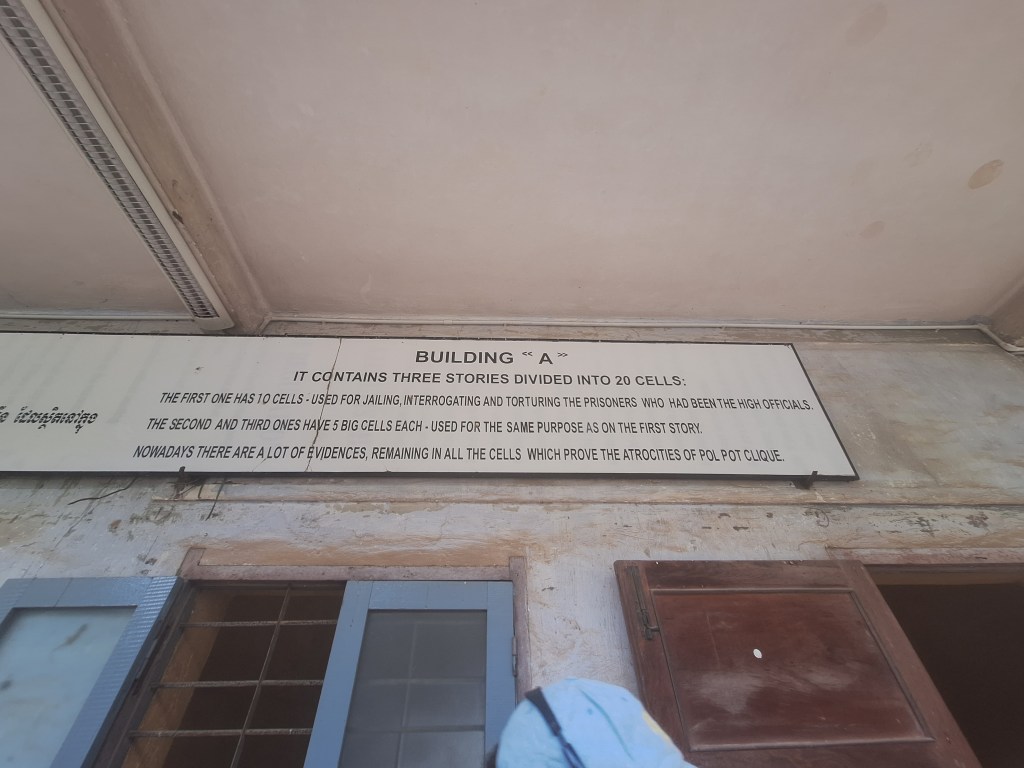
- Block A & B were for VIP. These cells were 5x3m. The metal bullet containers were their toilet. And was only emptied ever 2 weeks and if they spilt it they had to clean it with their tongue as punishment.
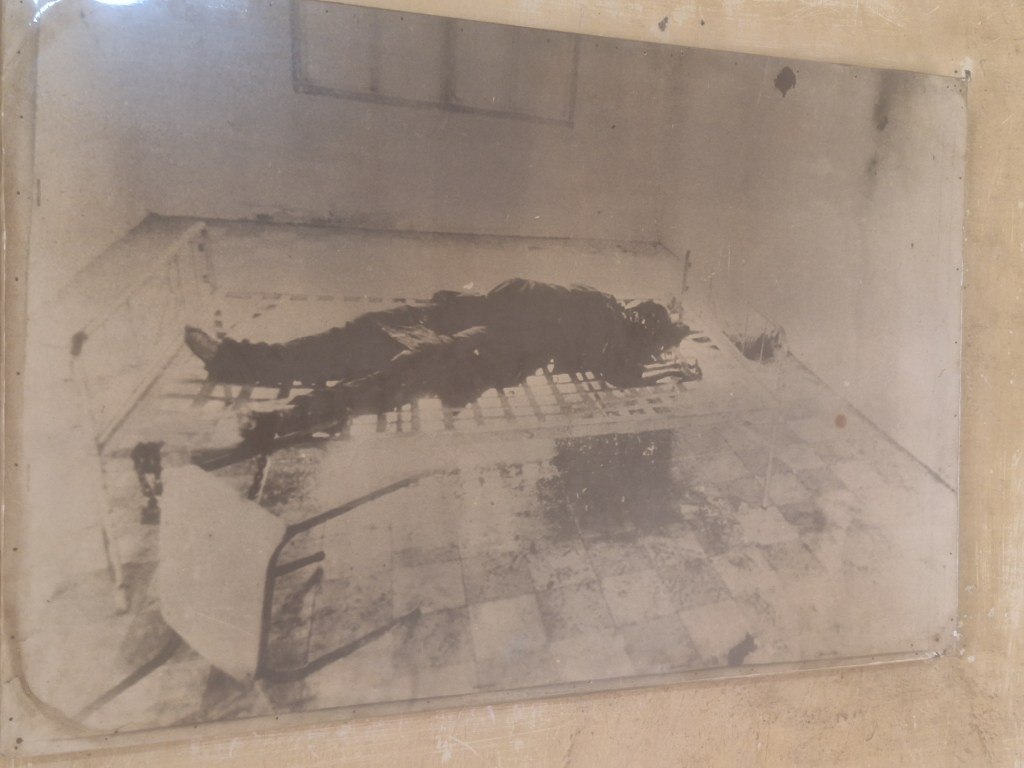
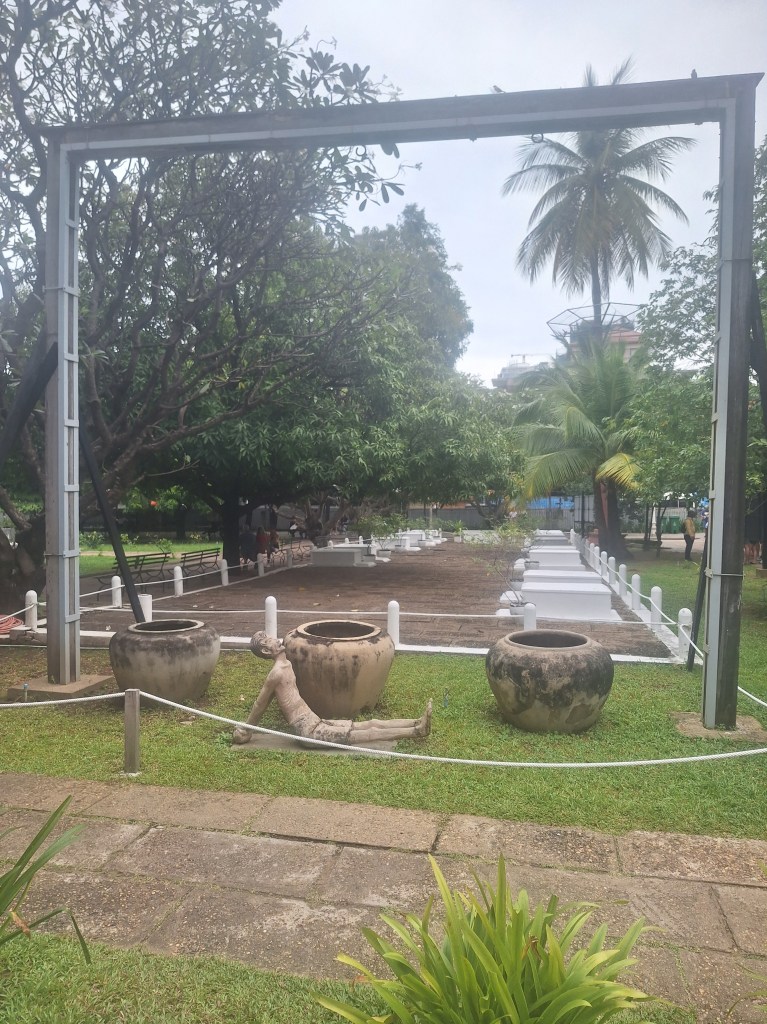
When the prison was liberated, they found 14 bodies in the VIP cells. There are 14 empty tombs outside in the garden as monuments to them.
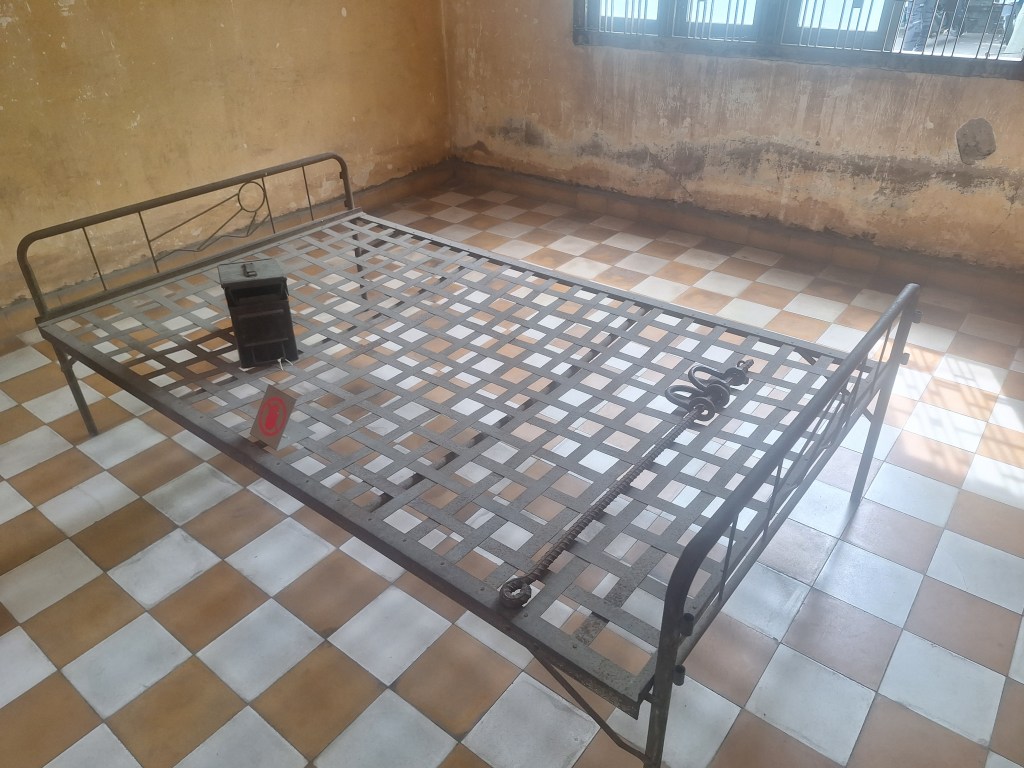
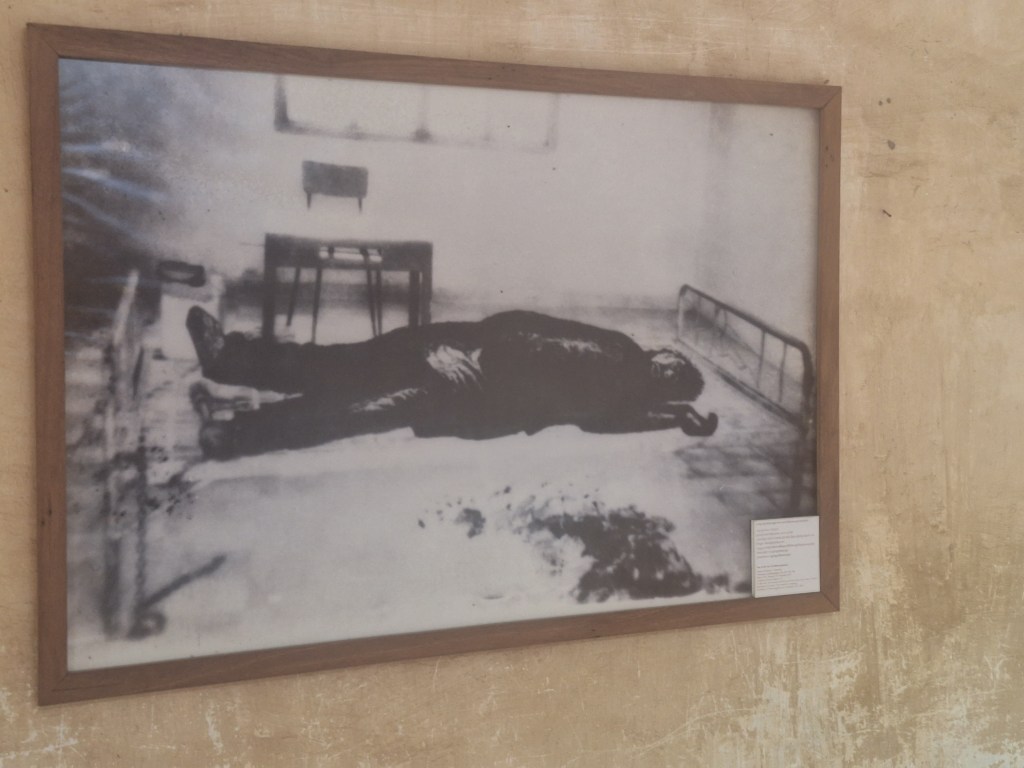
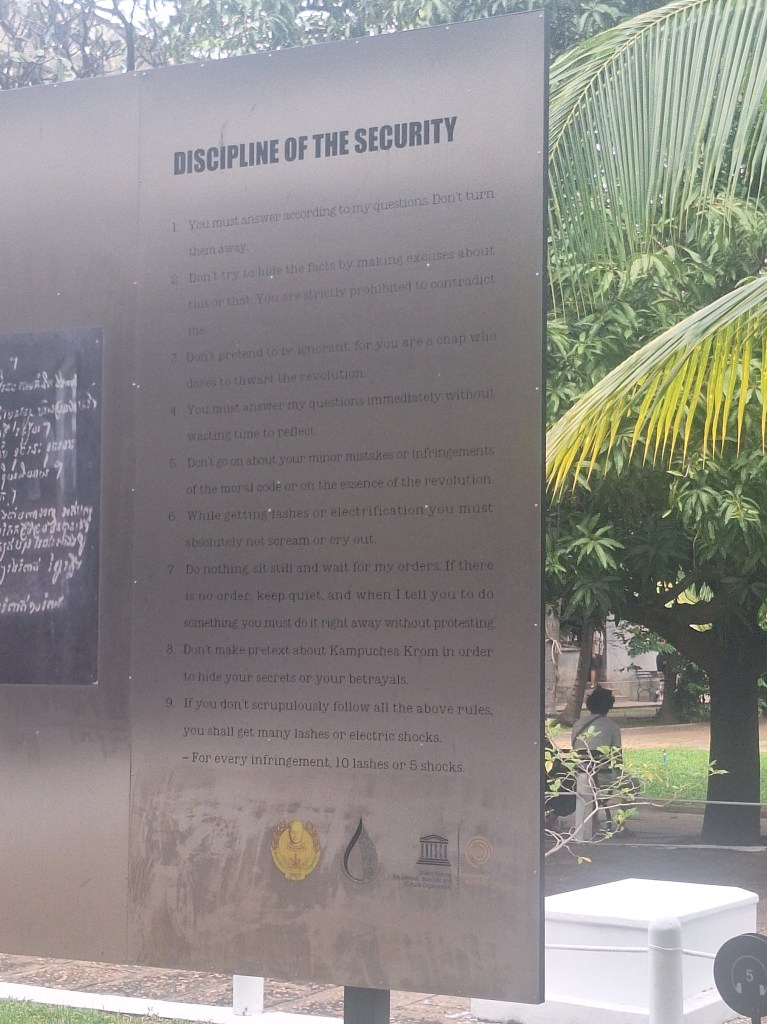
- Block C bottom floor were the mens cells. These old classrooms created 11 cells. 1m in length. The prisoners would sleep on the floor, separated by brick walls. They were locked in the cell by their ankles.
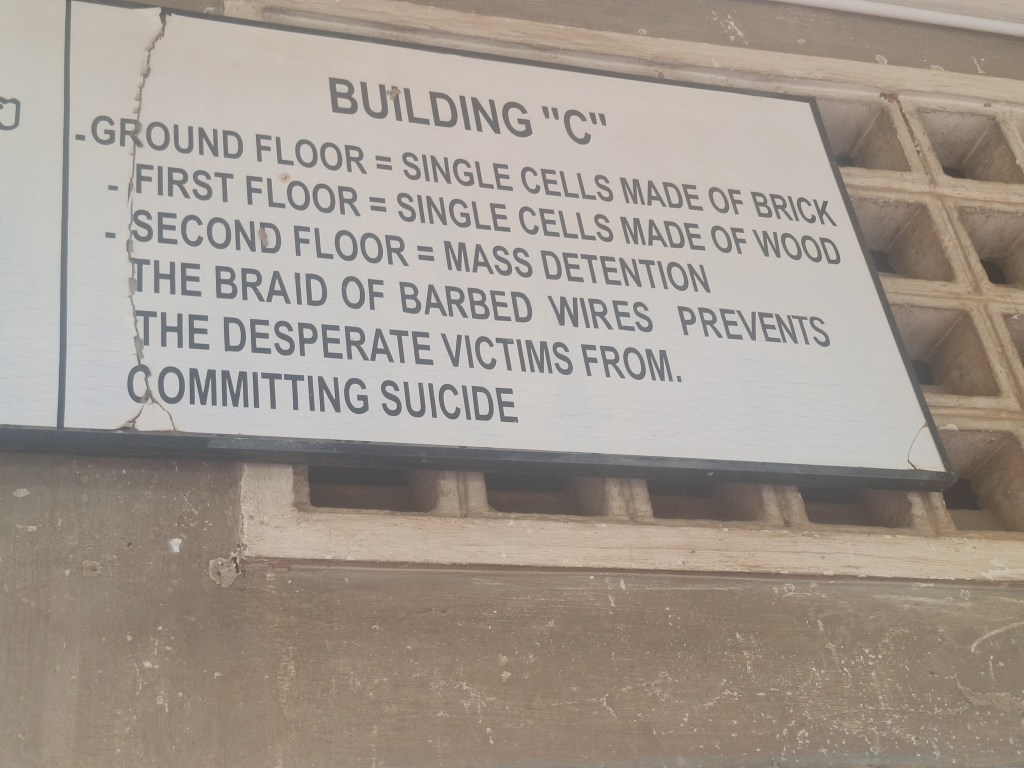

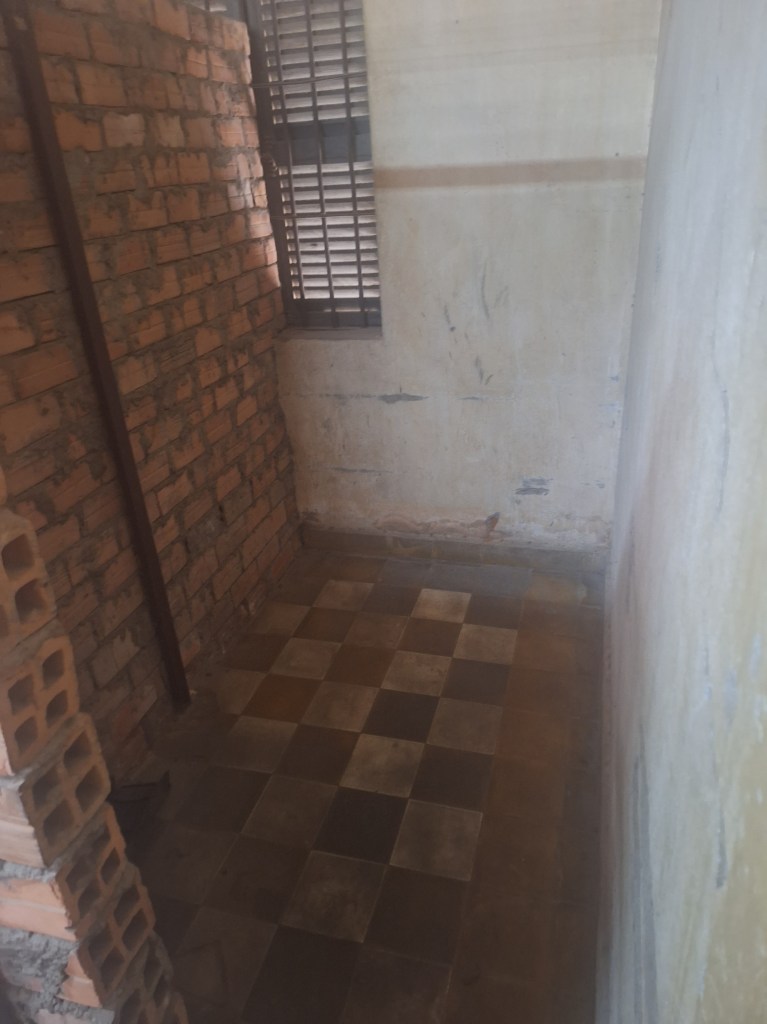
- Block C upstairs were the women’s cells. Women weren’t chained in the cells, but the cell doors were locked. They were made of wood.
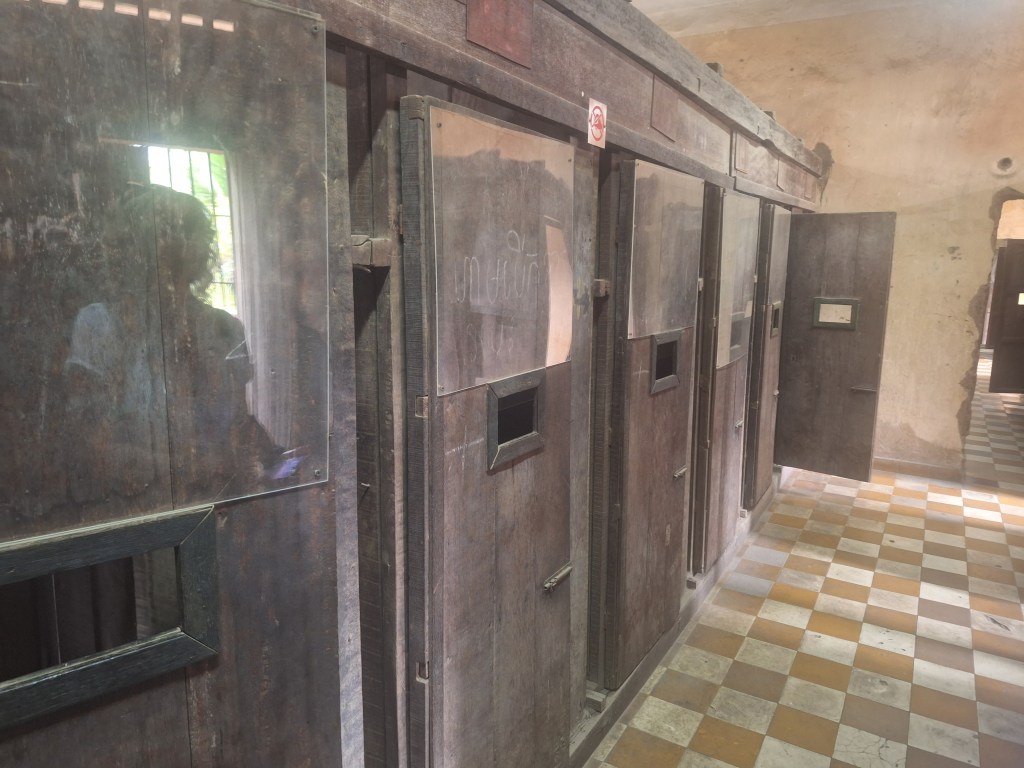
- Block C top floor was the mass detention room where prisoners were kept when they first arrived. There could be 30-60 people in the room and chained to a wooden log.
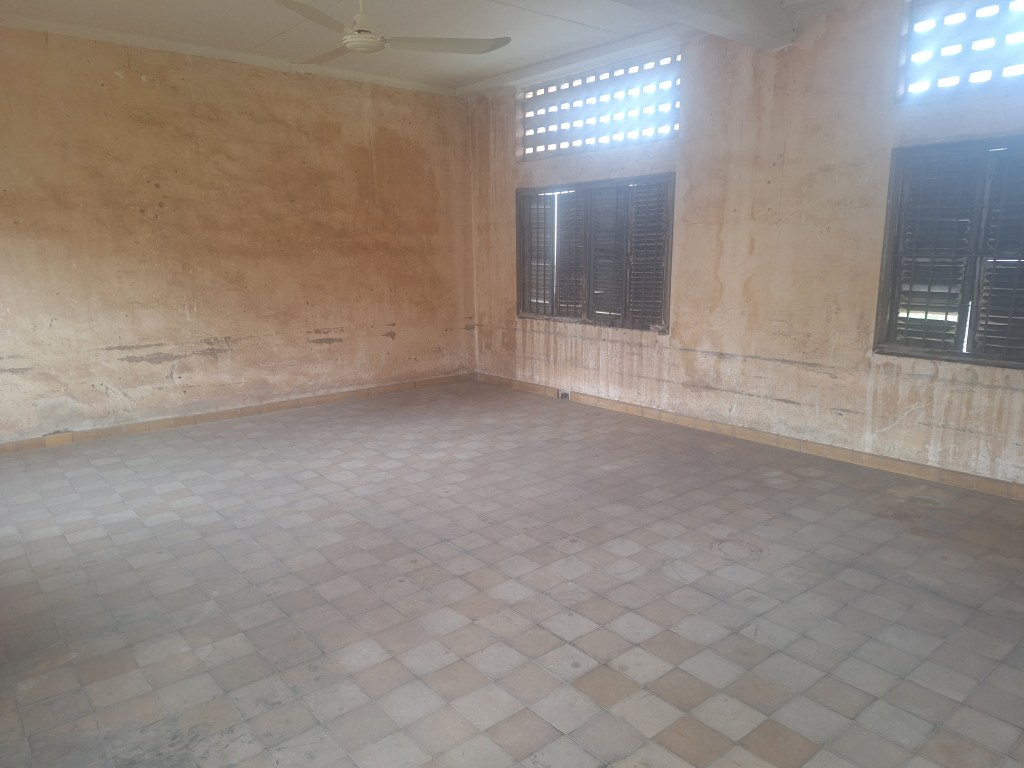
When the prison was liberated, 7 surviors were found at the prison. They were kept alive as they were deemed useful to the prison and regime. There was 1 guard as well (not in the photo).
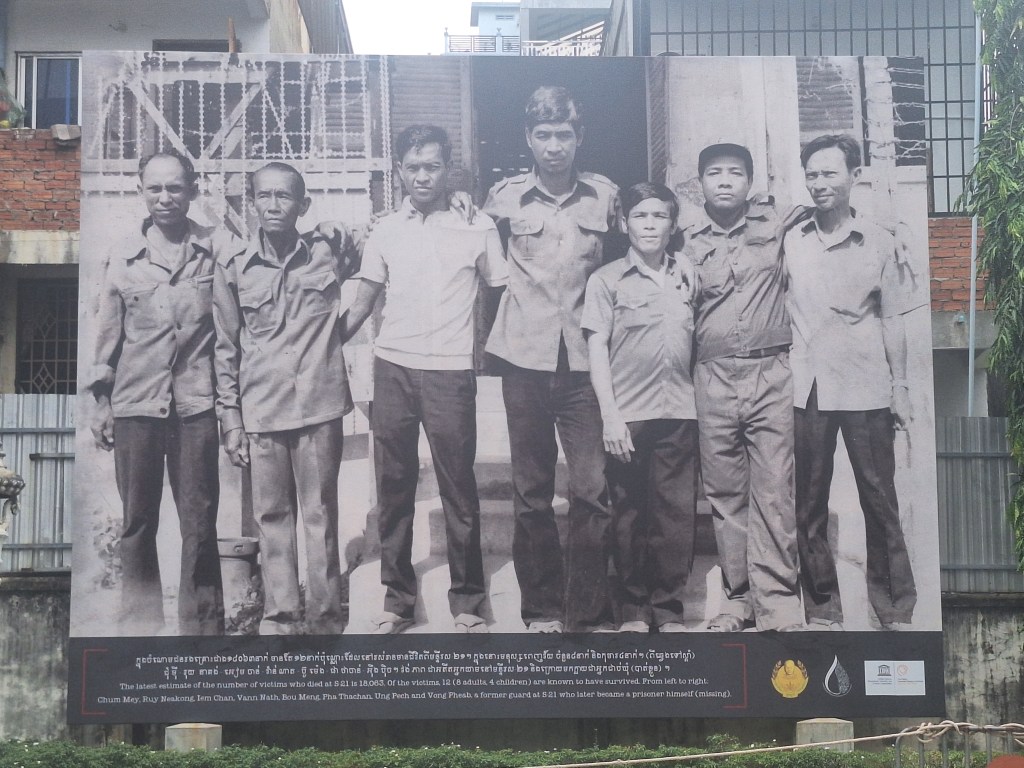
Two of these surviors were at the prison while we were there. The third from right, he’s 88 now, and he was an artist and the one on the left of the photo talked to us about his time, he had to lick the floor when he spilled his urine. He was selling a book. 50% of profits go to him and his family and the other 50% to the other victims’ families. I gave them money but didn’t take the book.


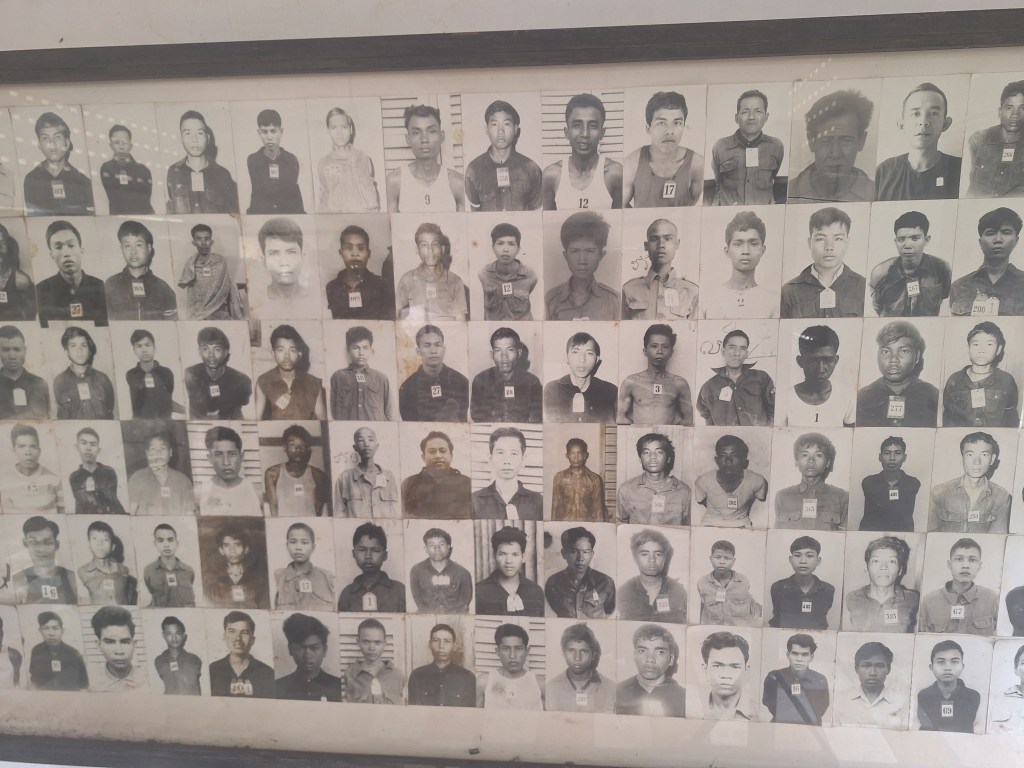
There were photos, hundreds of them. The ones without numbers are actually guards, and as you can see, they were pretty young! The ones with numbers were prisoners. They have these photos as negatives were found at the prison, but not many of the records remained. Our guide told us that the week before our visit, a gentleman came to the prisoknto remember his family as his brother was still classed as missing, and he found his photo on the wall!
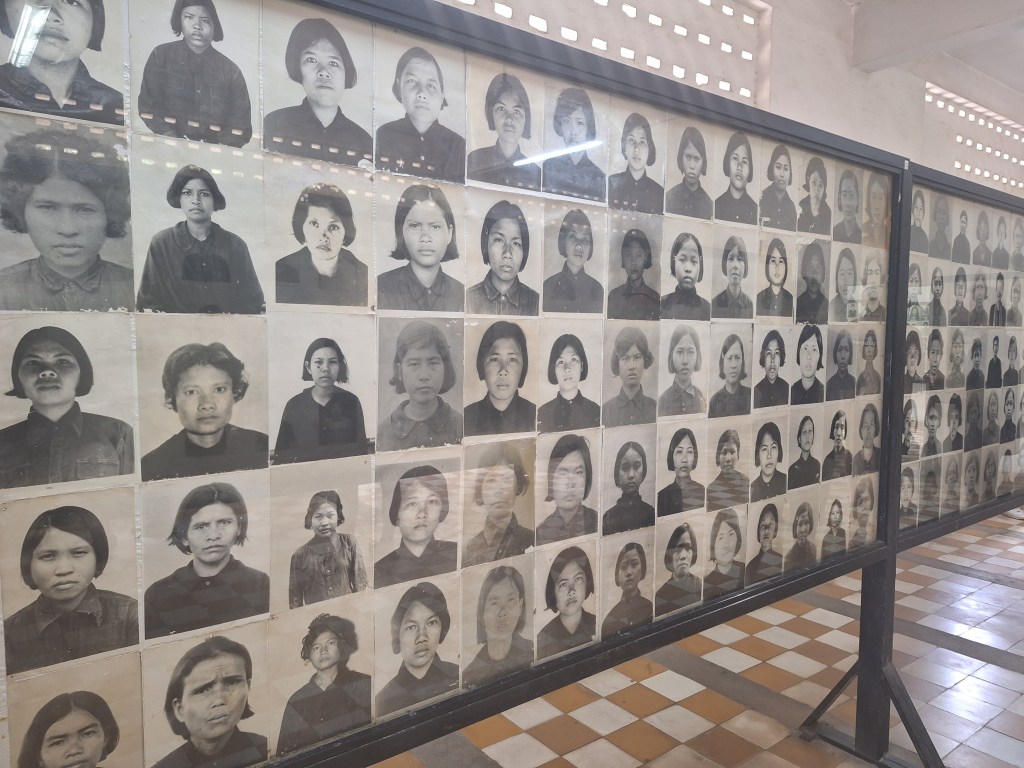
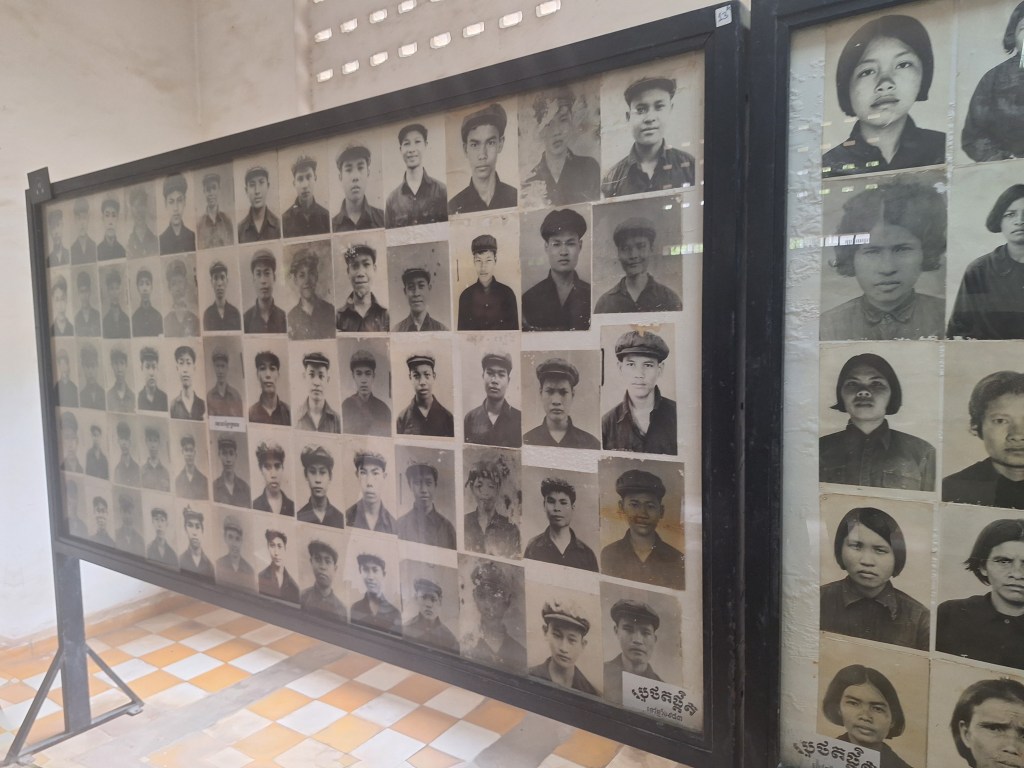
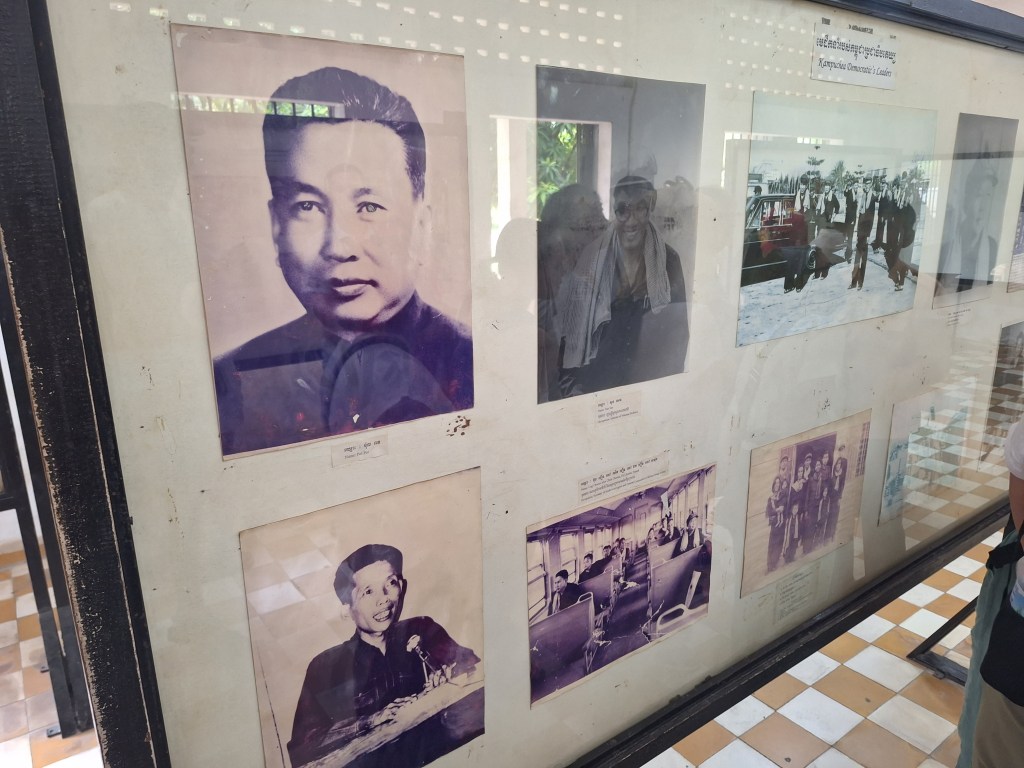
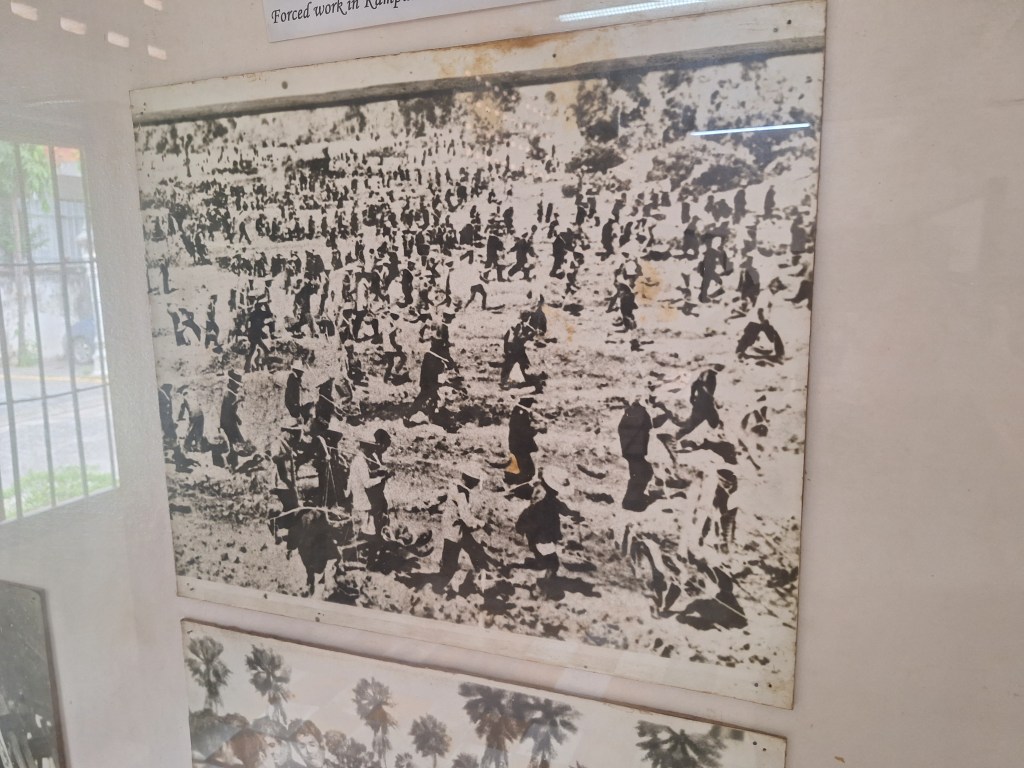


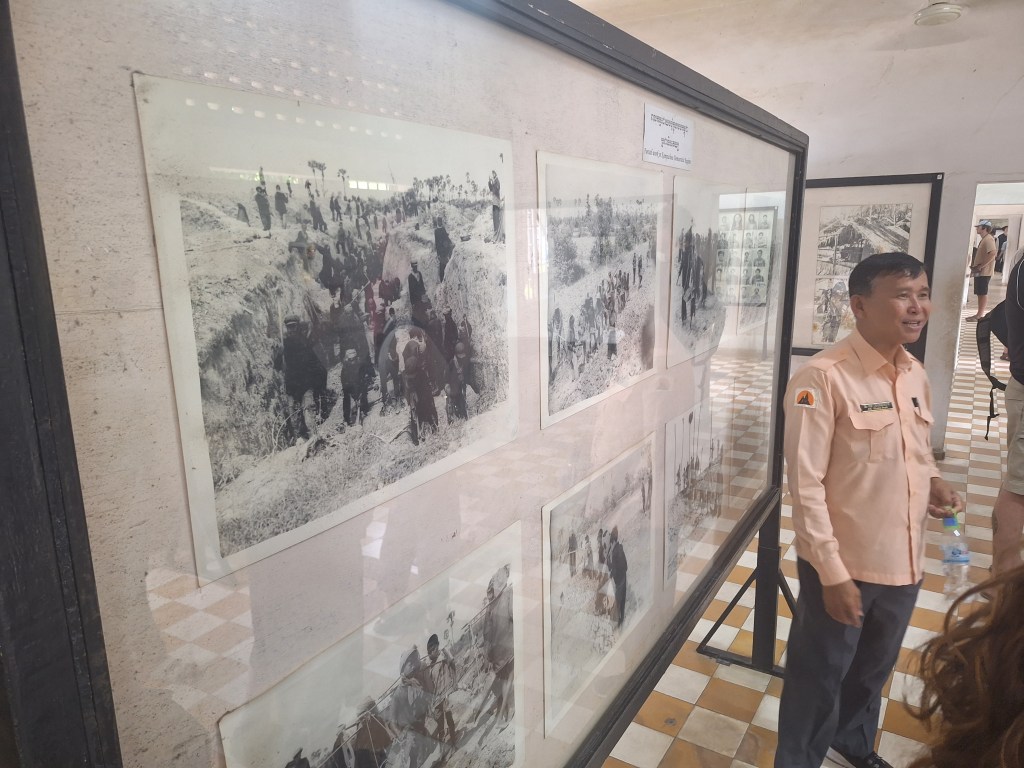
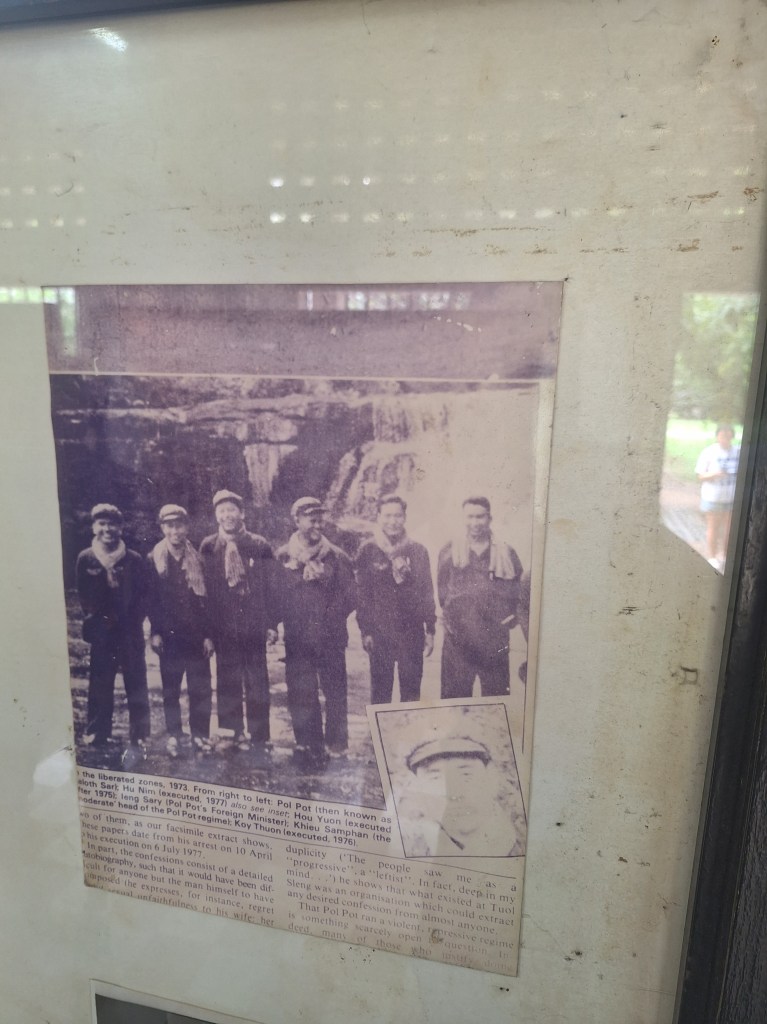
The newspaper article was before the regime, and the person cut out on the right side is the king!
The government decided in 1991 to bring peace to the country they only target and prosecute the leaders and senior members of the Khmer Rouge. With everyone else, they would not be indicted. Our guide mentioned that anyone over 53 years old could have been a soldier. Local people know who they are but choose to live in peace. He said they do not forget or forgive.
Our guide also said a lot of what we have seen and heard is illegal, and most people don’t fully understand their own history. They want us to tell their story so people know what happened here.
 Big Ginger Adventures Blog